This blog first posted one week after the 2016 Presidential Election. I'm reposting it now, because--
I suspect you'll see why as you read.
I made only minor edits.
Again, I suspect you'll see why as you read.
If you missed part one, it was re-posted last Monday. https://goo.gl/QdkKGD

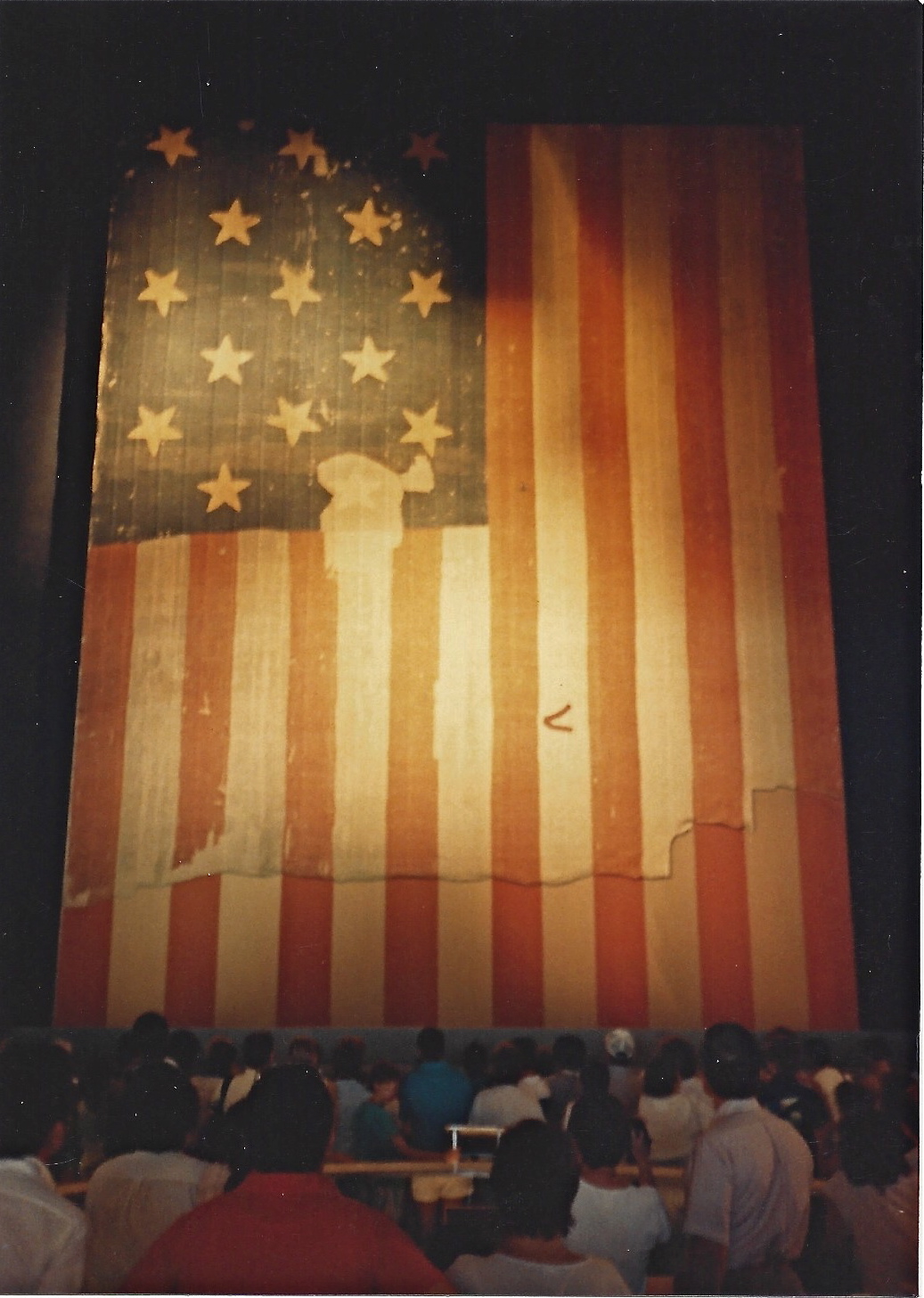
The iconic song, "God Bless America" was written by Irving Berlin in 1943. Those were dark days for our country. Berlin's song was a wisp of hope for a desperate nation. Kate Smith was one of the first to sing the song on the radio--THE social media of the day.
The song's message is as true and needed today as it was the day it was written. It's the title of this two blog-post series for that reason.
God Bless America - Part 2
What I've Learned
There has been more than enough complaining about the candidates and the results of the election. [That continues two years later. In some ways, it's gotten worse. Photos of President Trump used in many newscasts too often show a scowl or surprised look, while opponents of the President are too often shown smiling.]
One candidate was described as being anywhere from "unqualified" to the "least qualified candidate ever."
One was labeled as "criminal" by some and "just another insider."
Of course, the supporters of either candidate did not use those terms.
I pointed out yesterday in Part 1 of this blog post the qualifications for the presidency in the US Constitution and the fact that "party politics" is not mentioned in that document.
Today's focus is on
- American voters,
- National Presidential Election Day holiday,
- the Electoral College, and
- what I feel we, as American citizens, need to do now.
The American Voters
Nearly half of eligible voters (231,556,622 people) did not vote in the 2016 presidential election, according to data of early turnout rates compiled by the United States Election Project and crunched by Josh Nelson.
- 46.6% didn't vote
- 25.6% voted for Hillary Clinton
- 25.5% voted for Donald Trump
- 1.7% voted for Gary Johnson
You can see
I wonder what percentage of those rioting voted.
The percentage of eligible voters that voted in the 2016 Presidential Election ranged from 45% - 65%. Even those states with "high" turnouts, only 2/3 of the eligible voters chose to exercise that right.
Why?
General complacency is first on my non-scientifically-generated list. Non-voters think, "I'll show them what I think by not voting. That will send them a message." Reality: It does not.
States in the Pacific and Hawaiian time zones hear election results from other parts of the country up to three hours before the polls close.
I'm sure there are scores of other excuses given by non-voters. In my mind, there isn't any justifiable reason for not voting.
What can be done about the sorry voter turnout?
California polls don't close for three hours! No announcement like that should be made while polls are open anywhere in the USA!
Many California voters planned on voting on their way home from work. Many of those will choose not to vote because "my vote doesn't count." That justification for not voting is invalid. Only one item on the ballot is impacted by that announcement.
But the turnout in California is impacted by those announcements. Voter turnout in CA is nearly always lower than every other state.
I'm not the first to propose the idea of a National Presidential Election Holiday. I do think its time has come.
What means:
Unfair! Unfair!
The cry goes up from
Tough toenails. National Presidential Election Holiday levels the field for all candidates and ballot measures in all states.
Another leveling of the playing field for presidential candidates would be
Voters did not vote for a specific candidate--technically we still don't! Voters elect "electors" who are charged with voting for the candidate they think is most qualified.
"Today, all presidential electors are chosen by the voters, but, in the early republic, more than half the states chose electors in their legislatures, thus eliminating any direct involvement by the voting public in the election. This practice changed rapidly after the turn of the nineteenth century, however, as the right to vote was extended to an ever-wider segment of the population.
...
In fact, the balance of opinion by constitutional scholars is that, once electors have been chosen, they remain constitutionally free agents, able to vote for any candidate who meets the requirements for President and Vice President. Faithless electors have, however, been few in number (in the 20 century, one each in 1948, 1956, 1960, 1968, 1972, 1976, 1988, and 2000), and have never influenced the outcome of a presidential election."
The above quotations are from http://www.history.com/topics/electoral-college. I emphasized a portion to point out the reality of our current system. In fact, did you know...
With today's technology, the popular vote should determine the winner.
Eliminating the Electoral College requires a Constitutional Amendment. It's an Amendment that is overdue.
[Since I posted this, I've received a number of thoughtful responses opposing elimination of the Electoral College. I think that splitting each state's Electoral votes by the percentage each candidate received in that state would be enough to allow every voter's vote to impact the final results equally with every other voter's vote.]
If you were born an American Citizen, count your blessings.
"But, I don't like who was elected!"
In many countries, you don't get to vote. Period. Count your blessings and support the office of President.
"Things are getting worse in the USA."
Do something to change that. Count your blessings, and quit sitting and complaining.
That doesn't mean I'm willing to accept what's happening without doing something.
I taught high school for most of the 1970s, all of the 1980s, half of the 1990s, half of the 2000s, and the early part of the 2010s. Changes in students over that time were significant. I witnessed those changes more directly than many of you did.
I still believe in our youth and our country. Most of my former students prove why I should.
I pray for our national, state, and local leaders every week.
A Christian nation does not require a Christian government.
A Christian nation requires Christians acting with compassion, love, and tolerance as they become Christ's hands, feet, and physical presence for people in need.
Prayer changes things.
More importantly, prayer changes people! Changed people and change agents.
One of my prayers is
I invite you to pray for God to bless America along with me and millions of others.
I invite you to show compassion on the next marginalized person you encounter.
- nearly one-half eligible voters chose not to vote for the president of the United States.
- Hillary Clinton barely won the very close popular vote.
- Donald Trump was elected by only 1/4 of eligible voters.
I wonder what percentage of those rioting voted.
The percentage of eligible voters that voted in the 2016 Presidential Election ranged from 45% - 65%. Even those states with "high" turnouts, only 2/3 of the eligible voters chose to exercise that right.
Why?
General complacency is first on my non-scientifically-generated list. Non-voters think, "I'll show them what I think by not voting. That will send them a message." Reality: It does not.
States in the Pacific and Hawaiian time zones hear election results from other parts of the country up to three hours before the polls close.
I'm sure there are scores of other excuses given by non-voters. In my mind, there isn't any justifiable reason for not voting.
What can be done about the sorry voter turnout?
National Presidential Election Holiday
Living in California, I know what it's like to be sitting in my home watching the five o'clock news when the national media declare, "Whatta Candidate is three electoral votes away from clinching the election."California polls don't close for three hours! No announcement like that should be made while polls are open anywhere in the USA!
But the turnout in California is impacted by those announcements. Voter turnout in CA is nearly always lower than every other state.
I'm not the first to propose the idea of a National Presidential Election Holiday. I do think its time has come.
What means:
- Election day is a national holiday, just like the 4th of July.
- It happens on the second Tuesday of November every four years.
- Polls are open from 6:00AM to 8:00PM in every state.
- No votes can be counted anywhere in the USA until the polls are closed in ALL STATES.
- National election coverage by the media cannot begin until the polls are closed in ALL STATES.
Unfair! Unfair!
The cry goes up from
- media pundits--mostly East Coasters.
- broadcast networks--we can't be first to make the call.
Tough toenails. National Presidential Election Holiday levels the field for all candidates and ballot measures in all states.
Another leveling of the playing field for presidential candidates would be
Eliminating the Electoral College
Designed for a time when media was minimal, the Electoral College was designed to help elect the most qualified candidate as President of the USA.Voters did not vote for a specific candidate--technically we still don't! Voters elect "electors" who are charged with voting for the candidate they think is most qualified.
"Today, all presidential electors are chosen by the voters, but, in the early republic, more than half the states chose electors in their legislatures, thus eliminating any direct involvement by the voting public in the election. This practice changed rapidly after the turn of the nineteenth century, however, as the right to vote was extended to an ever-wider segment of the population.
...
In fact, the balance of opinion by constitutional scholars is that, once electors have been chosen, they remain constitutionally free agents, able to vote for any candidate who meets the requirements for President and Vice President. Faithless electors have, however, been few in number (in the 20 century, one each in 1948, 1956, 1960, 1968, 1972, 1976, 1988, and 2000), and have never influenced the outcome of a presidential election."
The above quotations are from http://www.history.com/topics/electoral-college. I emphasized a portion to point out the reality of our current system. In fact, did you know...
In 1824, John Quincy Adams was elected president despite not winning either the popular vote or the electoral vote. Andrew Jackson was the winner in both categories. Jackson received 38,000 more popular votes than Adams and beat him in the electoral vote 99 to 84. Despite his victories, Jackson didn’t reach the majority 131 votes needed in the Electoral College to be declared president. In fact, neither candidate did. The decision went to the House of Representatives, which voted Adams into the White House.
In 1876, Rutherford B. Hayes won the election (by a margin of one electoral vote), but he lost the popular vote by more than 250,000 ballots to Samuel J. Tilden .
In 1888, Benjamin Harrison received 233 electoral votes to Grover Cleveland ’s 168, winning the presidency. But Harrison lost the popular vote by more than 90,000 votes.
In 2000, George W. Bush was declared the winner of the general election and became the 43rd president, but he didn’t win the popular vote either. Al Gore holds that distinction, garnering about 540,000 more votes than Bush. However, Bush won the electoral vote, 271 to 266.
From USA Today
As of November 14, 2016, Hillary Clinton is winning the popular vote in the 2016 election.With today's technology, the popular vote should determine the winner.
Eliminating the Electoral College requires a Constitutional Amendment. It's an Amendment that is overdue.
[Since I posted this, I've received a number of thoughtful responses opposing elimination of the Electoral College. I think that splitting each state's Electoral votes by the percentage each candidate received in that state would be enough to allow every voter's vote to impact the final results equally with every other voter's vote.]
What I feel we, as American citizens, need to do now
We live in a great country. In spite of the "flaws" that are being emphasized by many groups, hundreds of thousands of refugees are waiting for a chance--or crossing USA borders illegally--to enter the USA. Significant numbers of legal immigrants become US Citizens. (47% of legal immigrants were naturalized in 2014)If you were born an American Citizen, count your blessings.
"But, I don't like who was elected!"
In many countries, you don't get to vote. Period. Count your blessings and support the office of President.
"Things are getting worse in the USA."
Do something to change that. Count your blessings, and quit sitting and complaining.
- Find a group that is working to improve conditions in your neighborhood, city, state, or the country in general.
- Join that group.
- Work with that group to bring about change.
That doesn't mean I'm willing to accept what's happening without doing something.
I taught high school for most of the 1970s, all of the 1980s, half of the 1990s, half of the 2000s, and the early part of the 2010s. Changes in students over that time were significant. I witnessed those changes more directly than many of you did.
I still believe in our youth and our country. Most of my former students prove why I should.
I pray for our national, state, and local leaders every week.
A Christian nation does not require a Christian government.
A Christian nation requires Christians acting with compassion, love, and tolerance as they become Christ's hands, feet, and physical presence for people in need.
Prayer changes things.
More importantly, prayer changes people! Changed people and change agents.
One of my prayers is
God bless America, land that I love
Stand beside her and guide her
Through the night with the light from above
From the mountains to the prairies
To the oceans white with foam
God bless America, my home sweet home
From the mountains to the prairies
To the oceans white with foam
God bless America, my home sweet home
God bless America, my home sweet home
Irving Berlin
God Bless America lyrics © Peermusic Publishing
I invite you to pray for God to bless America along with me and millions of others.
I invite you to show compassion on the next marginalized person you encounter.
- Speak with her/him.
- Listen to what he/she has to say.
- Don't judge.
- Don't try to explain issues away.
- Ask how you can pray for her/him and his/her family.
- Do what you are led to do--do what you can--to help if a need is expressed.
Over the last year, I made friends with a security guard on a construction project.
- He is from Somalia.
- He is studying to become a US Citizen.
- He supports his family by working horrific hours for low pay in a job he cannot afford to quit.
- He asked me not to contact his employer about his situation. He could not afford to be fired.
- I got him some contact information of agencies who might be able to help him and the others "employed" by the company.
- The job ended.
- He waved as he drove by me at the end of his final shift.
- His name is Essa.
- I pray for him and his family every day. My prayer includes seeing him again.
One of the offshoots of the rancor in the last election is a genuine fear in may marginalized populations.
I end with this.
- I listened to part of President-elect Trump's victory speech.
- I listened to part of Hillary Clinton's speech she gave the day after the election.
- I was encouraged by the words and tone of both speeches.
- It made me wonder why they both chose not to be like that during the election.
I would have loved to hear meaningful dialog and thoughtful ideas presented with a calm assurance of correctness throughout the campaign.
I wonder why WE didn't.
Next week I'll be back to my regular blog sequence. Tuesday will be Day in the Life of a Science Fiction Writer:
E-mail: crd.author@gmail.com
Follow me on Twitter: @CRDowningAuthor
and Facebook: https://www.facebook.com/CRDowningAuthor
My website is: www.crdowning.com